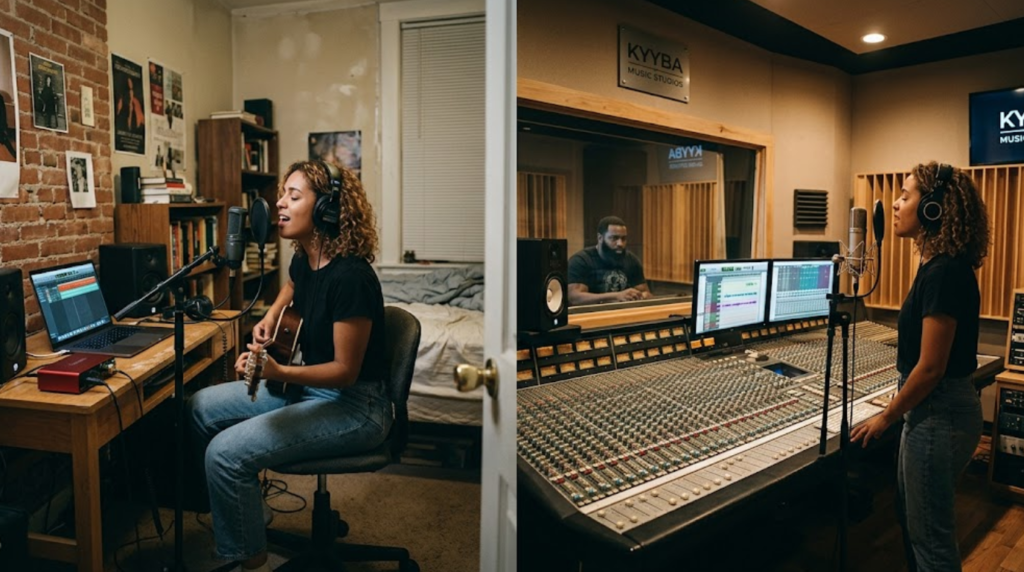
The Difference Between a Home Recording and Professional Studio Recording
Israel Oyeniran
28 September 2026
There is still a significant difference between recording at home and working in a professional recording studio.
A professional studio provides more than just expensive equipment. It offers a controlled recording environment, professional experience, high quality equipment and the technical expertise needed to turn a musical idea into a polished and release ready production.
At Quavers Studio, we understand that every artist has a unique sound and vision. Our goal is to provide an environment where artists can concentrate on their creativity while our production team focuses on capturing and developing their sound.
1. The Recording Environment
One of the biggest differences between home recording and professional studio recording is the recording environment.
Most homes are not designed for recording music. Rooms contain hard surfaces, windows, furniture and other objects that can cause unwanted reflections and echoes. These sounds can become part of the recording and make it more difficult to achieve a clean and professional result.
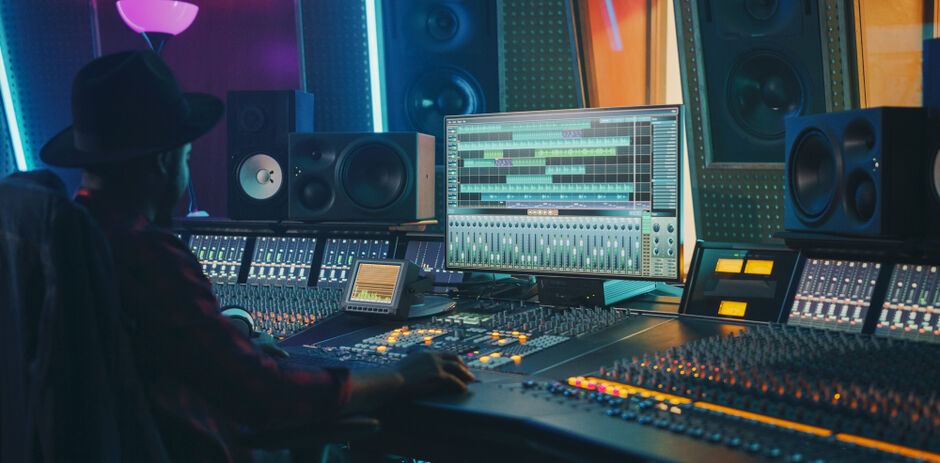
Professional recording studios are designed with acoustics in mind. The room is treated to control unwanted reflections and improve the way sound is captured.
This means that when an artist records vocals or instruments, the microphone captures a cleaner and more controlled sound.
At Quavers Studio, we provide an environment designed to help artists get the best possible recording from their performance.
2. Professional Recording Equipment
Another major difference is the quality and variety of equipment available.
A home setup may consist of a basic microphone, an audio interface, headphones and a computer. This can be enough to start recording, especially for artists who are learning and experimenting.
Professional studios, however, generally have access to a wider range of microphones, preamps, monitoring systems, instruments, studio equipment and professional software.
Different microphones can produce different tones. A microphone that works well for one vocalist may not be the best choice for another. Having access to different equipment allows the engineer to choose tools that suit the artist and the particular song.
At Quavers Studio, we use our equipment and technical experience to help artists achieve a sound that matches their musical direction.
3. The Experience of a Sound Engineer
Having good equipment is important, but knowing how to use it is equally important.
An inexperienced producer or artist may spend hours trying to solve problems such as unwanted noise, poor microphone placement, incorrect recording levels or an unsuitable sound.
A professional sound engineer understands how to set up microphones, manage recording levels, identify technical problems and create an environment where the artist can perform comfortably.
The engineer can also listen to the recording objectively and make technical suggestions that the artist may not notice while concentrating on their performance.
At Quavers Studio, we work with artists throughout the recording process, helping them focus on their performance while paying attention to the technical details behind the recording.
4. Better Monitoring
What you hear while recording can affect your performance.
A poor monitoring setup can make it difficult for an artist to hear their vocals, instruments or backing track correctly. This can affect timing, pitch, confidence and overall performance.
Professional studios are equipped with monitoring systems designed to provide a more accurate representation of the recording.
This allows the artist and engineer to make better decisions during the session.
When you can clearly hear what you are recording, you can concentrate more effectively on your performance.
5. Professional Mixing and Mastering
Recording is only one part of making a song.
After recording, the tracks need to be edited, mixed and mastered.
Mixing involves balancing the different elements of a song, including vocals, drums, bass, keyboards and other instruments. Effects such as equalisation, compression, reverb and delay can also be used to help create the desired sound.
Mastering is the final stage of the production process. It prepares the finished track for distribution and helps it translate well across different listening systems.
You can perform these processes at home if you have the knowledge, software and experience. However, professional guidance can make a significant difference to the final result.
At Quavers Studio, we help artists move beyond simply recording a song and work towards creating a polished production that represents their musical identity.
6. Fewer Technical Problems
Recording at home can sometimes involve unexpected technical problems.
You may experience background noise, computer issues, microphone problems, poor acoustics, latency or software configuration problems.
These issues can interrupt your creative process and waste valuable time.
A professional studio is built around the recording process. Equipment is prepared and connected for production, allowing artists to spend more time creating music and less time trying to solve technical problems.
7. A Professional Creative Environment
The environment where you create music can influence your creativity.
Recording in a bedroom can be comfortable, but it may also come with distractions. Family members, phones, household noise and other activities can interrupt a recording session.
A professional studio provides a dedicated environment where the main focus is music.
At Quavers Studio, we want artists to feel comfortable, confident and inspired when they walk into the studio. Whether you are recording your first song or working on your next project, the aim is to create an environment where your ideas can develop.
8. Home Recording Still Has Its Place
It is important to understand that home recording is not necessarily bad.
Many artists use home recording as part of their creative process. It can be useful for writing demos, practising vocals, creating ideas and experimenting with different sounds.
A home setup can also be a great starting point for an upcoming artist who is learning about music production.
The difference is that a professional studio gives you access to an environment, equipment and expertise that may not be available at home.
You do not necessarily have to choose one or the other. Many artists use home recording for creating ideas and professional studios for producing the final version of their music.
9. Your Music Deserves to Be Heard Properly
As an artist, your music represents you.
You may have spent days, weeks or even months writing a song. You have a story to tell, emotions to express and a message you want your audience to hear.
A poor recording can make it difficult for listeners to appreciate the work behind the song.
A professional recording gives your music a better opportunity to communicate your ideas clearly.
It is not simply about making your song sound expensive. It is about making sure the recording reflects the effort, creativity and emotion you put into your music.
Why Choose Quavers Studio?
At Quavers Studio, we believe every artist has a sound worth developing.
Our studio provides a space where musicians, singers and creative artists can turn their ideas into professionally produced music.
From recording and production to mixing and other studio services, we work with artists to help them develop their sound and bring their musical vision to life.
Whether you are an upcoming artist preparing for your first professional recording session or an experienced musician working on a new project, the right recording environment can make a meaningful difference.
Final Thoughts
Home recording has opened many doors for musicians. It allows artists to create, practise and experiment without needing to book a studio every time they have an idea.
However, when you are ready to take your music to the next level, professional studio recording offers advantages that go beyond equipment.
A controlled recording environment, professional equipment, experienced engineers, accurate monitoring and proper mixing and mastering can all contribute to a stronger final production.
Your music deserves to be heard the way you imagined it.
Ready to turn your idea into a professional recording? Book your next session at Quavers Studio and let us help you bring your sound to life.